
 English
 简体中文
简体中文
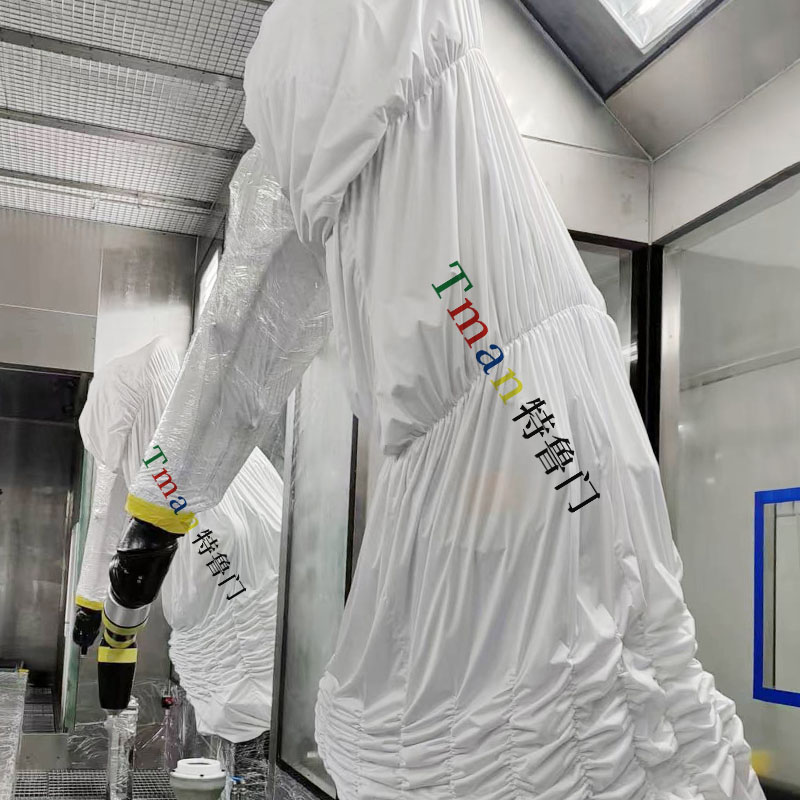
When a car is sprayed, a large amount of paint mist, corrosive solvents and dust particles are splashed around. Once these substances adhere to the surface of the robot, they will accelerate the oxidation and corrosion of metal parts, lead to circuit aging, and even cause sensor failure. The paint-resistant protective clothing is made of wear-resistant and paint-resistant material and is made of precision cutting and sewing processes to fit the robot closely. Special elastic structures are designed in key parts such as joints to avoid affecting the flexibility of the robotic arm. Moreover, the segmented structure ensures that the protective clothing remains airtight when the robot rotates at multiple angles, preventing paint mist from penetrating into the internal circuit and providing reliable physical protection for the robot.
During spraying operations, static electricity generated by robot movement can easily cause sparks, leading to safety accidents. The anti-paint protective clothing is made of anti-static material, which can prevent the accumulation of static electricity on the surface of the robot and reduce the risk of electric sparks. At the same time, the dust-proof and paint-proof properties of the protective clothing can prevent solvents from penetrating into the motor through the shaft joints, preventing the lubricating oil from being diluted and causing equipment failure.
From the perspective of equipment management, anti-paint protective clothing extends the service life of key components of the robot and reduces the frequency of maintenance and replacement costs of spare parts. Its segmented structural design supports partial replacement, further reducing maintenance costs. At the same time, stable production reduces unplanned downtime and improves production efficiency.
Special-purpose robot paint-proof protective clothing for automobile spraying workshops has become an indispensable piece of equipment in production. Through multiple protective functions, it ensures the safe operation of equipment, improves production quality and efficiency, reduces production costs, and provides strong support for the stable development of automobile painting processes.


